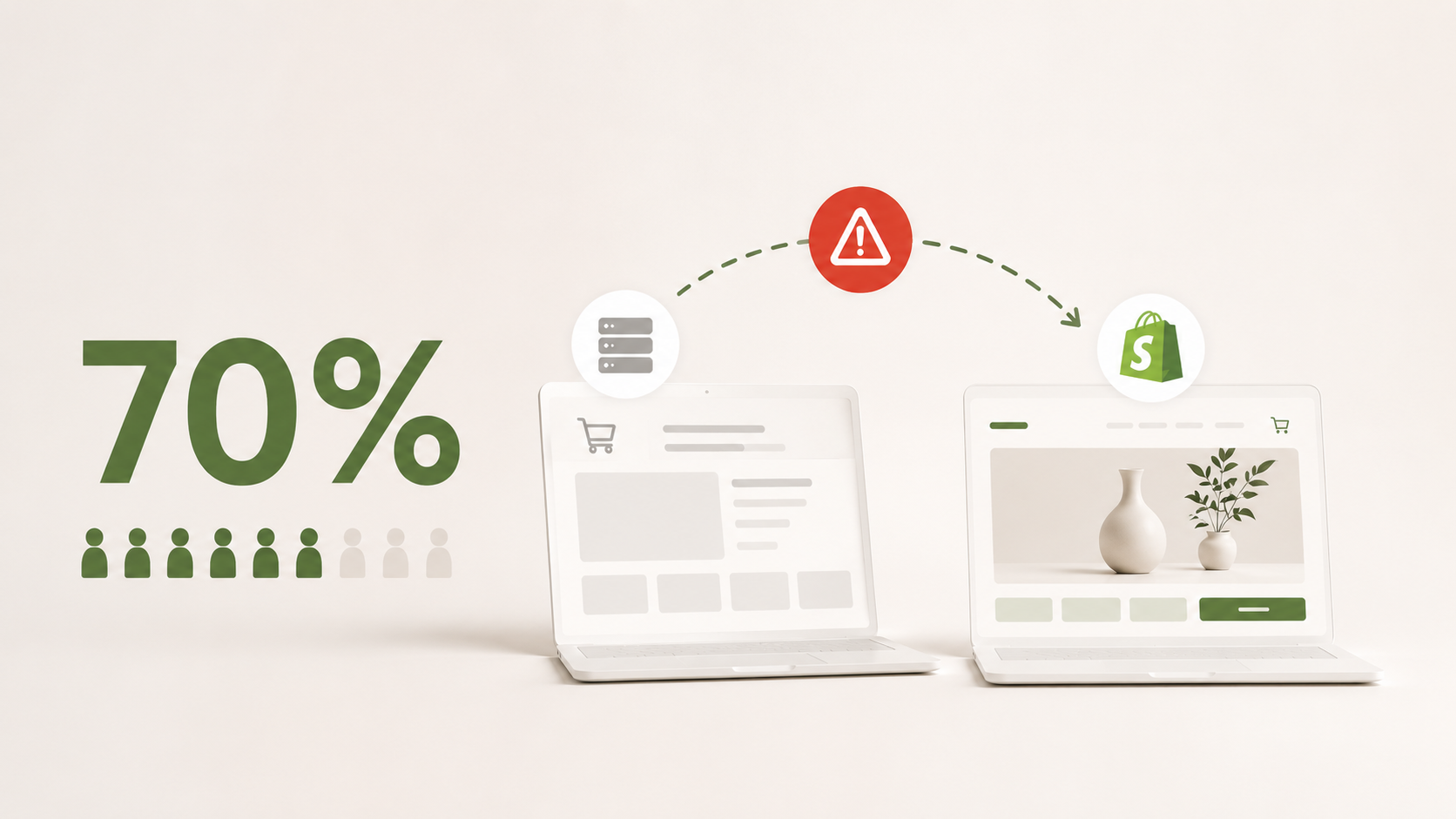
70% of online stores that migrate platforms make the same mistake: they underestimate what needs to be prepared before moving the first byte. The result is not just a slower process than expected. It is a loss of SEO positioning, customers who cannot pay during the transition, and, in some cases, months of technical work to return to the starting point.
Migrating is not like moving house. It is rebuilding the foundations while you continue selling.
At Wizybot, we work with stores that need not only to sell more but to sustain the operation during the process. That is why we seek to partner with agencies that understand this. One of them is Prende Agency, the first Shopify Expert agency in Peru, with more than 7 years migrating, building, and optimizing stores on the platform for clients in LATAM, the United States, Canada, and Europe.
Why Most Migrations Fail Halfway Through the Process
A platform migration does not fail due to a lack of intention. It fails due to a lack of prior diagnosis.
Before moving a single product, three questions that most ignore must be answered: how many 301 redirects the site needs to avoid losing SEO, whether the current payment gateways are compatible with Shopify, and if the catalog has data errors that will multiply upon importing.
According to data from Shopify, e-commerce businesses that migrate without a prior audit lose an average of 15% to 40% of their organic traffic during the first three months. Recovering it can take between 6 and 12 months of SEO work.
The Prende Agency team starts every project with a research phase where they map the current state of the e-commerce, conversion bottlenecks, and the real technical scope of the work. This diagnosis is what determines whether a migration takes 4 weeks or 4 months.
What Makes a Well-Executed Migration Different
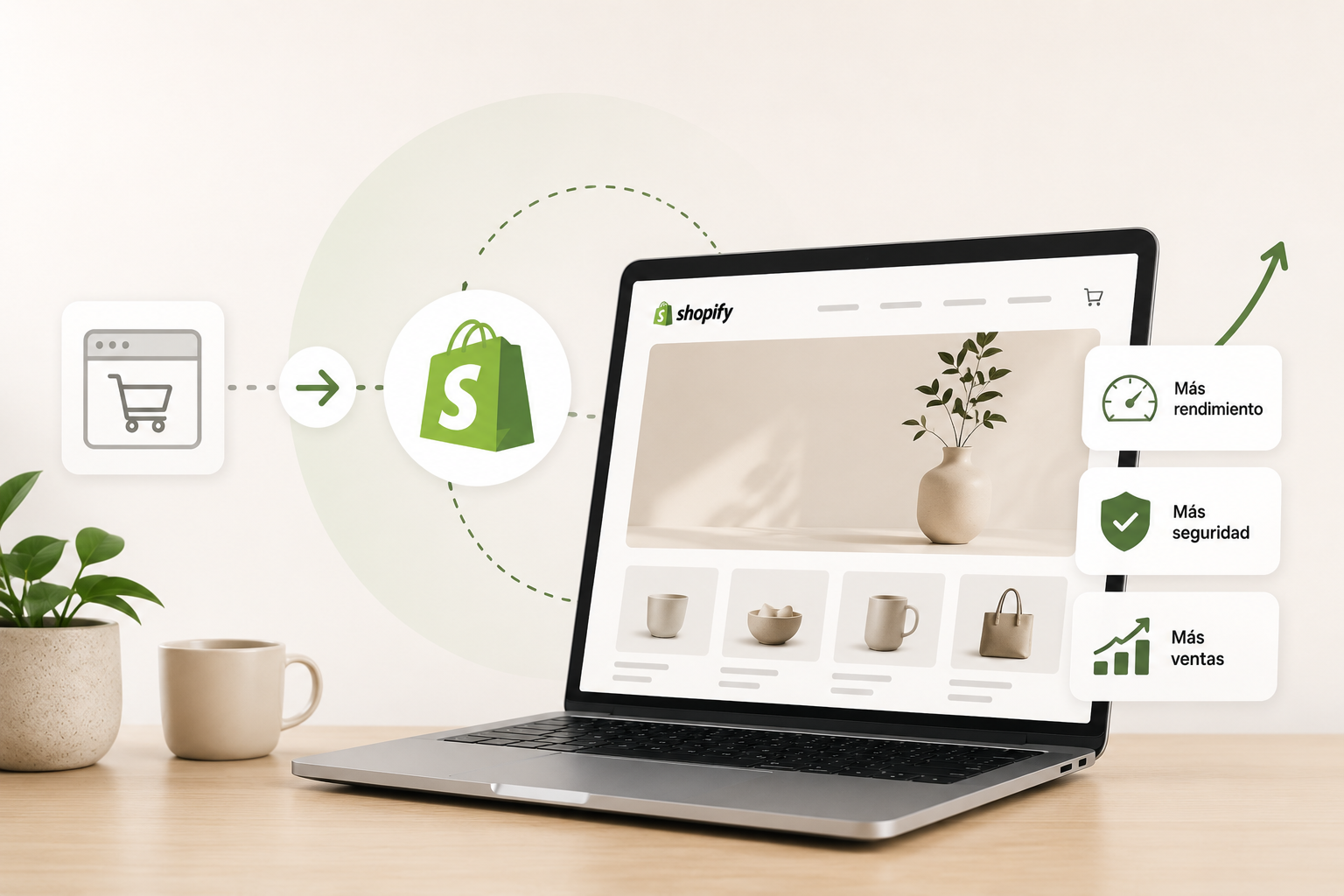
The difference between a migration that works and one that generates problems is not in the platform. It is in the execution.
There are four variables that separate a successful migration from one that leaves traces for months:
- SEO Preservation: Every URL that changes needs a correctly implemented 301 redirect. Without this, Google indexes the new site as duplicate content or discards it as 404 errors.
- Catalog Integrity: Migrated product data must be reviewed field by field. A metadata error in WooCommerce can turn into 500 errors in Shopify if it is not cleaned beforehand.
- Checkout Continuity: All payment methods must be tested before activating the site. Not during. Before.
- Post-Migration Speed: Shopify has good baseline metrics, but a theme with too much custom code can slow down Core Web Vitals and affect ranking.
The Prende Agency portfolio includes fashion, skincare, supplements, and niche product stores with a presence in Peru, Chile, the United States, and Europe. Categories where design, speed, and the shopping experience are decisive for conversion.
CRO: What Starts When the Migration Ends
Many stores make a second mistake after migrating: believing that the work is finished when the site is live.
Shopify is a high-performance platform, but a well-migrated store is not necessarily a store that converts well. The average e-commerce conversion rate is around 1% to 2%, according to data from the Baymard Institute. What lies above that range is not luck: it is continuous optimization.
Conversion Rate Optimization (CRO) is the process of improvement based on user behavior data in the store. Prende applies it as a post-migration phase: they analyze the purchase journey, identify where users are lost, and adjust the design and flows based on what the data says.
It is the step that turns a functional store into a store that sells.
How It Complements Wizybot
A well-built and conversion-optimized store is the starting point. But conversion does not only happen on the product page: it also happens in every conversation the user has after deciding to ask something.
When a Shopify store is up and running, the next problem that appears is the volume of inquiries: questions about sizes, availability, delivery times, order status. All of that arrives via WhatsApp, Instagram, and chat at the same time.
That is where Wizybot comes in. Our AI customer service platform for e-commerce integrates directly with Shopify and automates 96% of those inquiries without the team having to respond one by one. The store keeps selling while the team sleeps.
The combination is concrete: Prende builds and optimizes the store. Wizybot sustains the service and sales operation once the traffic arrives.
Are you thinking about migrating your store?
A well-executed Shopify migration can be the decision that changes the scale of your business. Poorly executed, it can cost you months of recovery.
The difference is almost always in who you do it with. A team that diagnoses before acting, that has experience in sectors that move real volume, and that does not disappear when the site is live.
If you are evaluating a migration or want to improve the conversion of your current store, visit prende.agency and tell them what stage your e-commerce is in. With more than 100 stores intervened and 7 years working exclusively on Shopify, they have a clear diagnosis from the first conversation.